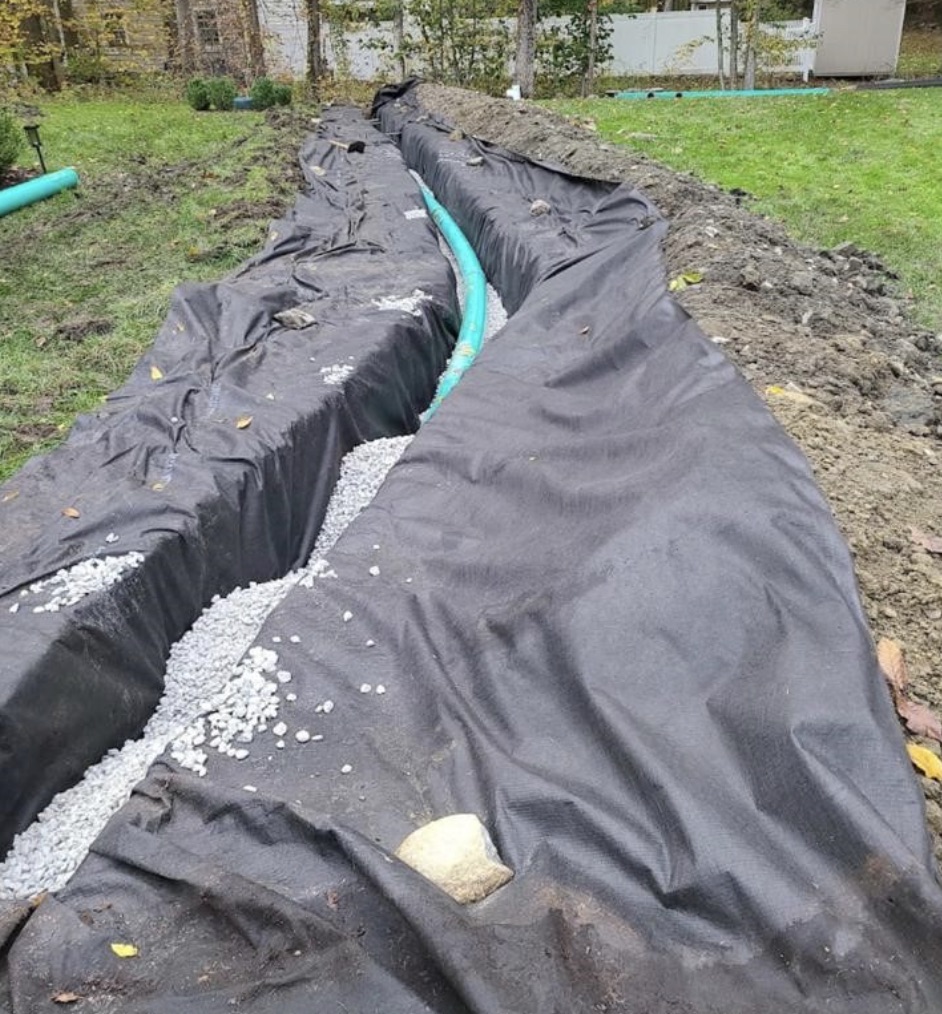
A French drain is one of the most useful tools for moving groundwater away from a foundation. Here's how it works and when it's the right fix.
A French drain is one of the most useful drainage tools we install around Connecticut homes. It does something simple: it captures water moving through the soil and carries it away before it reaches the foundation, saturates a yard, or pools in a low spot. It's a quiet, underground fix that solves problems grading and surface drains alone can't reach. Here's how it works and when it fits.
What a French Drain Actually Does
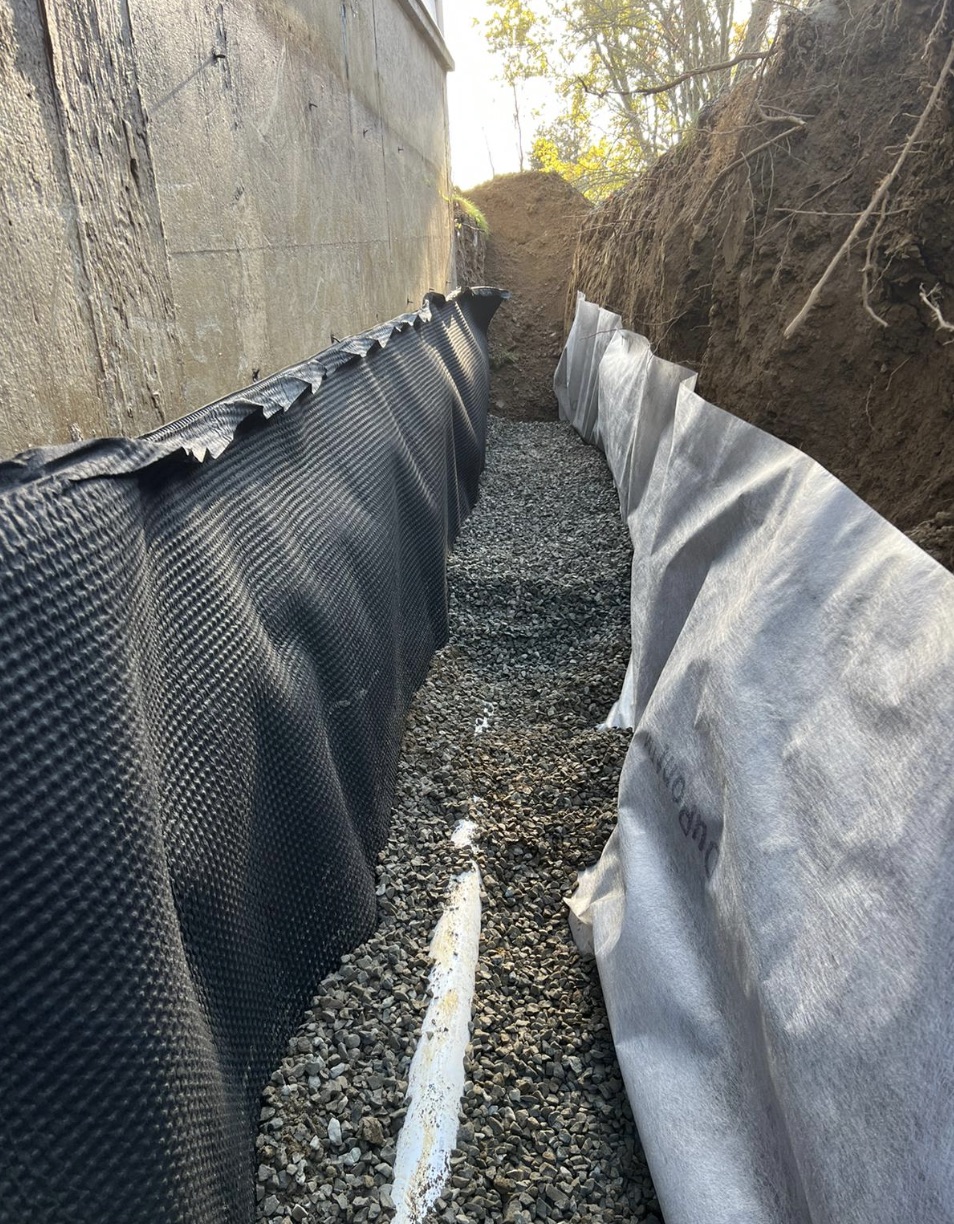
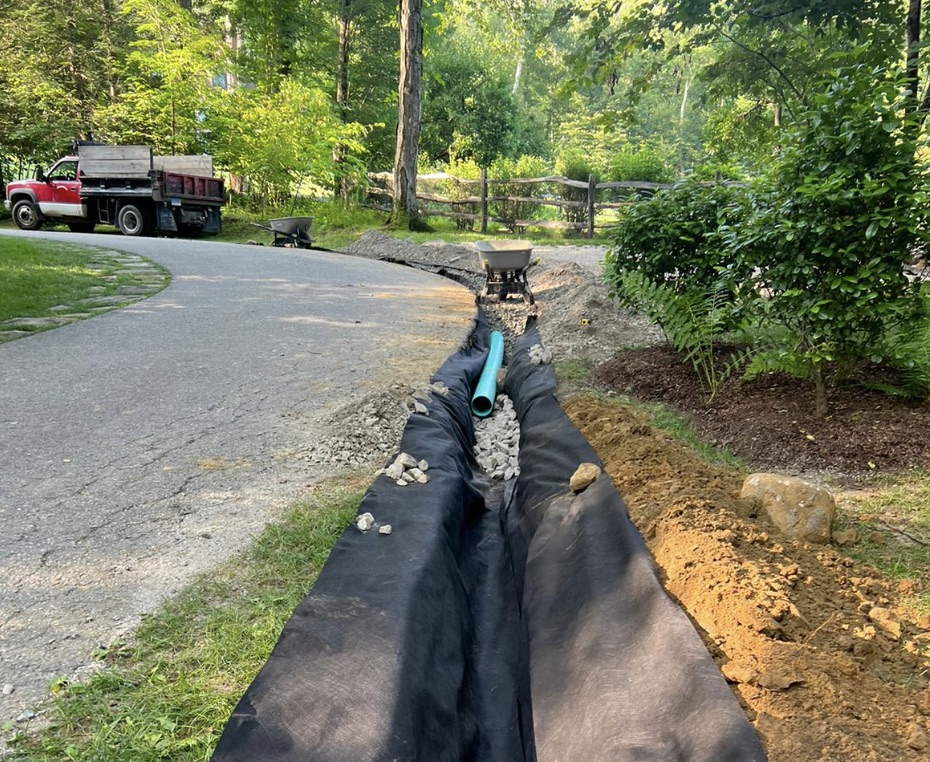
A French drain is a subsurface drainage system — a trench filled with clean stone, lined with filter fabric, and carrying a perforated pipe. Water moving through the soil enters the trench, flows into the pipe through its perforations, and travels along the pipe to a discharge point away from the house.
Because it sits below grade, it intercepts groundwater that surface drains can't reach. It doesn't wait for water to pool on top — it catches it as it moves through the soil profile, which is exactly the water that ends up pressing against your foundation wall.
Why That Matters for Your Foundation
Most foundation water problems start in the soil. When the ground around your home holds water — from rain, snowmelt, or a high water table — that water moves toward the foundation by gravity and hydrostatic pressure. A French drain interrupts that movement, giving the water a faster, easier path away from the wall than into it.
It's one of the most effective ways to relieve the pressure that causes seepage, wall cracks, and basement dampness. Where the source of basement water is the soil around the foundation, a French drain is often part of the fix.
When a French Drain Fits
- A persistently soggy or soft area of the yard that never dries
- Water flowing across the lot toward the foundation
- A low spot or swale that holds water after rain
- Groundwater pressing against the foundation from the surrounding soil
- Downspout and surface runoff that saturates the ground near the house
If your basement is damp because the ground outside is wet, a French drain is often the right tool. If the water is coming up through the slab under pressure, an interior perimeter drain may be the better fit. The right answer depends on where the water enters — which is why we look at both before recommending one.
How We Install One
A French drain only works if it's installed with the right grade and a clear outlet. Here's what goes into a proper installation:
- Map where water enters the property and where it needs to exit
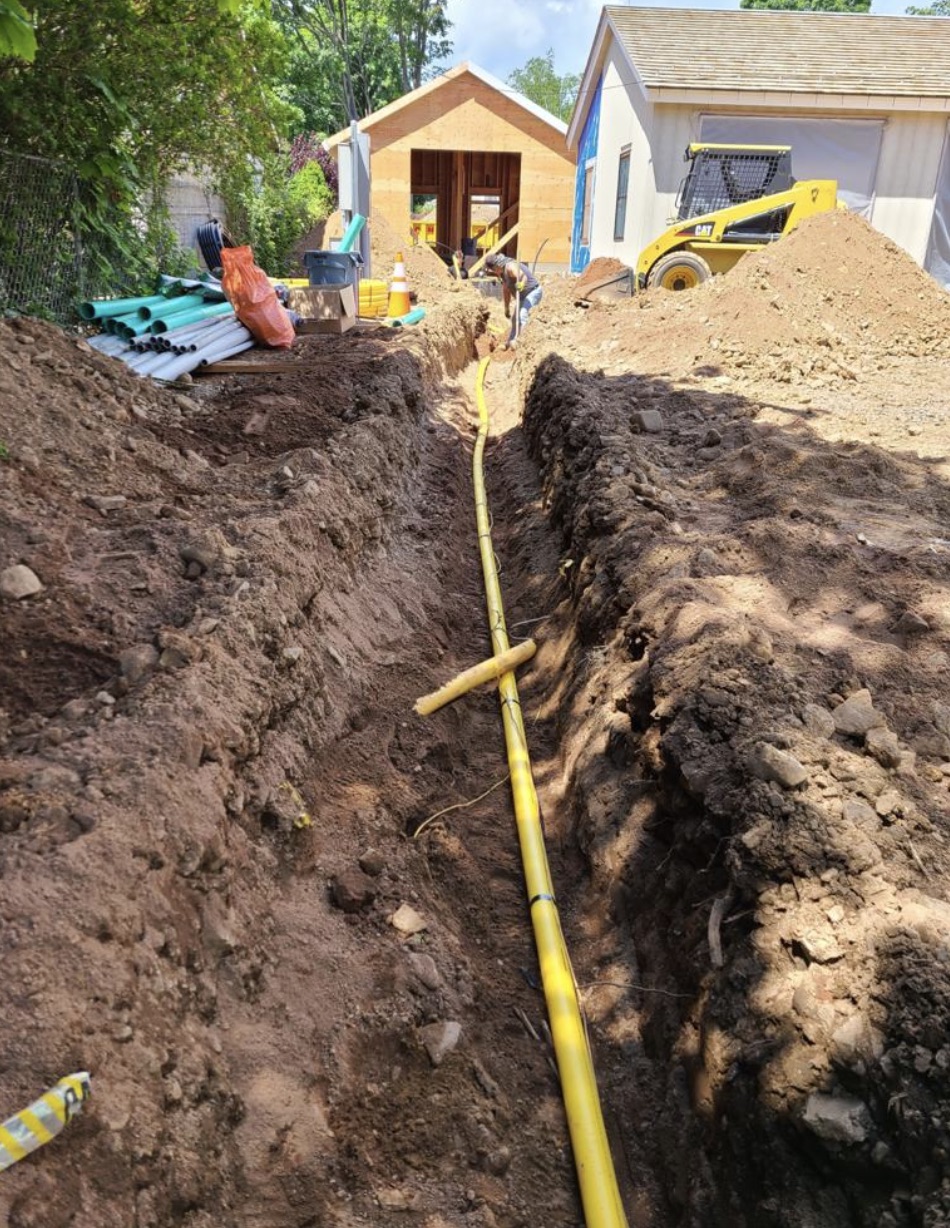
- Cut a graded trench along the planned drainage path
- Line the trench with filter fabric to keep sediment out
- Lay perforated pipe on a clean stone bed for flow
- Cover with stone and fold the fabric over to keep soil out
- Plan the discharge — a daylight outlet, dry well, or tie-in
The discharge is what makes or breaks a French drain. A drain that dead-ends, sits flat, or discharges back toward the house doesn't solve the problem — it just relocates it. We plan the path, the slope, and the outlet before we dig so the finished system actually moves water off the property.
French Drain vs. Surface Drainage
Surface drains and catch basins grab water that's already on top of the ground. French drains capture water moving underground, through the soil. On most properties, the two work together — surface drains handle runoff, French drains handle groundwater, and grading ties them both together.
If your yard is soggy and your basement is damp, the combination of yard drainage and a French drain is often the answer. If the ground around the foundation slopes toward the house, grading and drainage correction usually comes first.
Groundwater pressing on your foundation? Request a free estimate for a French drain plan.