Both stop basement water — but from opposite sides of the foundation wall. Here's how interior and exterior waterproofing differ, and how to tell which fits your home.
Interior and exterior waterproofing solve the same problem from opposite sides of the foundation wall. One stops water before it reaches the concrete; the other manages it the moment it gets inside. Neither is universally better — the right choice depends on where the water enters, what access you have, and what's built up against the outside of the house. Here's how the two approaches differ and how to think about which one fits your home.
Exterior Foundation Waterproofing
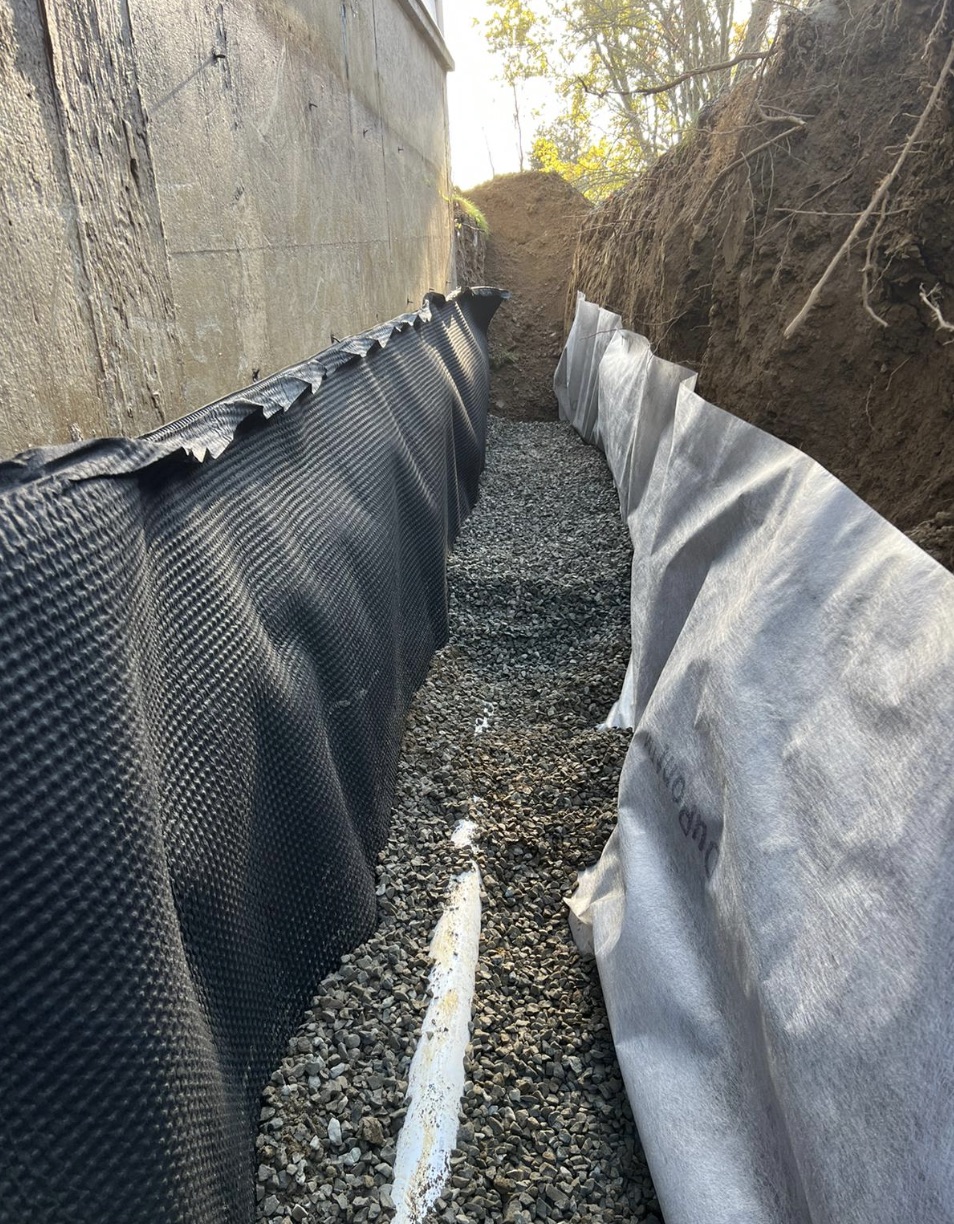
Exterior waterproofing addresses water at its source — the outside face of the foundation wall. The process involves excavating down to the footing alongside the wall, cleaning and inspecting the concrete, applying a continuous waterproofing membrane, and installing a drainage layer that carries groundwater away rather than letting it press against the wall.
Because it stops water outside the wall, it's the most direct way to keep the concrete itself from saturating — which matters through Connecticut winters, when saturated concrete is vulnerable to freeze-thaw damage. It also protects the wall from the steady hydrostatic pressure that causes seepage and, over time, structural movement.
When exterior waterproofing fits
- Water is entering high on the wall, above the floor
- Exterior access is open — no deck, patio, or finished landscaping tight against the wall
- The existing membrane is aged or missing and the wall is taking on water
- You want to stop water before it ever reaches the interior
Interior Basement Waterproofing
Interior waterproofing manages water from inside the basement when exterior excavation isn't practical — under a finished space, a tight lot, a deck, or a driveway. Instead of stopping water at the outside face of the wall, it captures water the moment it enters and moves it out before it can spread across the floor.
The core of an interior system is a perimeter drain cut into the floor around the basement's edge, which intercepts water at the cove joint — where most basement leaks actually start. A wall channel or membrane directs wall seepage down into the drain, and a sump pump lifts the collected water out and away from the foundation.
When interior waterproofing fits
- Exterior access is blocked by a deck, patio, walkway, or finished space
- Water is tracking in from the floor-to-wall joint
- You want to manage water without disrupting the exterior
- The basement sits close to the water table and needs ongoing management
The Key Difference: Barrier vs. Management
Exterior waterproofing is a barrier — it keeps water out of the wall. Interior waterproofing is a management system — it captures water that has entered and redirects it. That distinction matters for expectations: an exterior system stops water at the source, while an interior system keeps the space dry by handling water that has already gotten in.
On homes where the exterior is open, exterior waterproofing often addresses the cause more directly. Where exterior access is limited, interior waterproofing is the practical answer. And many Connecticut homes benefit from both — exterior work where access allows, interior management on the sides that can't be excavated.
How We Decide Which Fits
The choice comes down to a few practical questions we walk through on site:
- Where on the wall is the water entering?
- Is the exterior accessible, or is it built up against?
- Is the water pressure coming from outside the wall or rising up through the slab?
- Is the basement finished, or is it an open unfinished space?
If water is entering high on the wall and the exterior is accessible, exterior foundation waterproofing is usually the right call. If water is coming in at the cove joint and the exterior is blocked, interior basement waterproofing is the practical fix. When the signs are mixed, a combined plan often makes the most sense.
Not sure which side your basement needs? Request a free estimate and we'll assess both.