Most basement water problems give warning signs long before a finished space floods. Here's what to look for in a Connecticut home — and what each sign actually means.
Basement water problems rarely arrive without warning. Long before a finished room floods, the walls, the floor joint, and the air usually tell you something is changing. Catching those signs early is the difference between a small correction and a full interior waterproofing system. Here are the signs we see most often in Danbury and the surrounding towns, and what each one actually means.
Water at the Floor-to-Wall Joint
The cove joint — where the basement floor meets the wall — is the most common place water appears first. It's where hydrostatic pressure pushing up through the slab finds an opening. A damp cove joint after rain isn't a floor problem; it's a sign that water pressure is building under and against the foundation.
When that pressure has nowhere to go, it forces water up through the joint. That's why an interior perimeter drain and sump system, which captures water at exactly that point, is the backbone of most basement waterproofing plans.
Damp, Musty Air That Lingers
A musty basement smell is almost always moisture, not just age. When basement humidity stays high, the air picks up that characteristic smell from organic growth on damp surfaces. A dehumidifier can mask it, but if the smell returns, the underlying moisture is still there.
Waterproofing and proper water management bring the humidity down by addressing the source rather than just drying the air around it.
Efflorescence on the Walls
That white, chalky powder on a foundation wall has a name: efflorescence. It's mineral residue left behind when water moves through the concrete and evaporates on the surface. It's not structural damage on its own, but it is direct evidence that water is traveling through your wall.
Efflorescence tells you the wall is taking on water even when the surface looks dry. Where it's heavy or recurring, the wall usually needs a waterproofing membrane or an interior wall management layer.
Peeling Paint or Bubbling Below-Grade Walls
Paint that blisters, bubbles, or peels on a below-grade wall is usually being pushed off by moisture behind it. The coating is failing because water vapor is moving outward through the wall. It's cosmetic damage, but it's a symptom of the same water movement that causes bigger problems.
Rust at the Base of Posts or Appliances
Look at the bottom of metal posts, the sump pit, the water heater, or anything else that sits on the basement floor. Rust at the base means humidity or occasional wetting has been present. It's a subtle sign, but it confirms the basement has been damp enough to corrode metal.
Cracks That Dampen or Weep During Rain
Not every foundation crack is structural, but any crack that lets water through is a working path for water. A vertical or diagonal crack that dampens during a storm is a direct entry point. Targeted crack repair closes that path; if the same crack returns, the pressure behind it usually needs a drainage fix too.
If you're seeing cracks, read our guide to foundation crack repair to understand when a crack is isolated and when it points to a deeper issue.
Water Staining High on the Wall
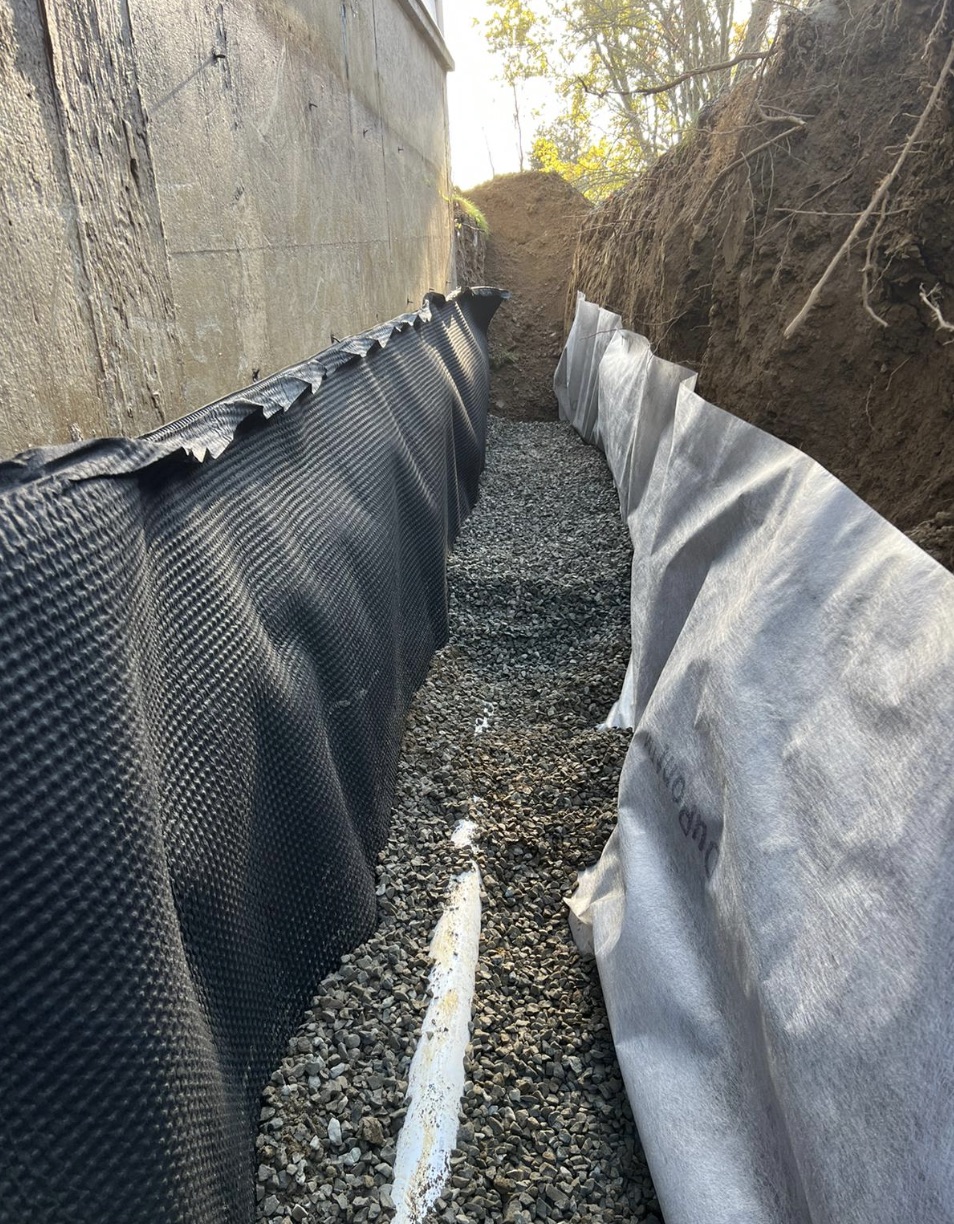
Staining high on the basement wall — above the floor — usually means water is coming through the wall itself rather than rising up from the slab. That's a different problem than cove-joint seepage, and it often points to exterior waterproofing as the more appropriate fix, because the water is entering before it ever reaches the interior.
What to Do If You See These Signs
No single sign by itself tells you whether you need interior or exterior waterproofing — that depends on where the water enters, what access you have, and what's around the foundation. The right first step is an assessment that looks at the whole picture: the lot, the wall, the floor joint, and the air.
- Note which signs appear and where on the wall or floor they show up
- Watch whether they happen during rain, snowmelt, or year-round
- Check whether the problem is one spot or across a whole wall
- Keep the area clear so the source can be inspected
If any of these signs sound familiar, we'll come look at the basement and tell you plainly what's going on and what your options are. Whether the answer is basement waterproofing, exterior foundation waterproofing, or a targeted crack repair, the goal is the same: fix the cause, not just the symptom.
See a sign you recognize? Get a free estimate and we'll take a look at your basement.